

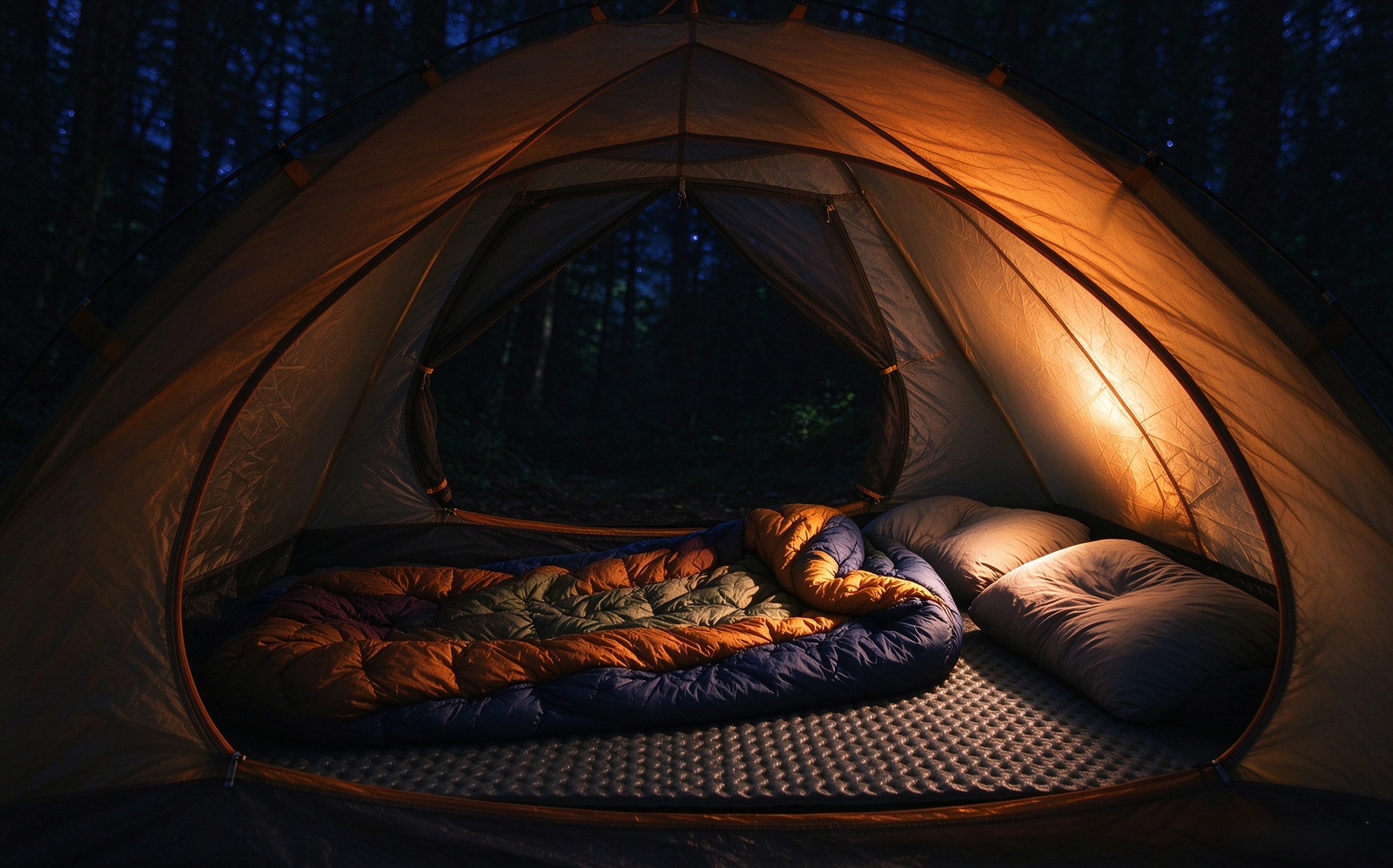
A bad night’s sleep can ruin an otherwise great camping trip. I’ve found that choosing the right sleeping setup matters just as much as choosing a good tent. You can have a beautiful campsite, a warm sleeping bag, and everything packed neatly, but if you’re lying on a cold, uncomfortable pad all night, you’re probably not going to enjoy the morning.
The good news is that you don’t need an expensive backpacking setup to sleep comfortably outdoors. You need the right combination of sleeping bag, sleeping pad, and pillow for the way you camp.
In this guide, I’ll break down what to look for in camping sleeping gear in 2026, which types work best for different trips, and where it’s worth spending a little extra money.
Quick Picks: What Camping Sleeping Gear Should You Choose?
If you don’t want to spend hours comparing equipment, start here.
| Gear | Best For | What to Look For |
|---|---|---|
| Sleeping bag | Warmth and comfort | Temperature rating, fit, insulation |
| Inflatable sleeping pad | Comfort with less packed bulk | R-value, thickness, packed size |
| Foam sleeping pad | Budget camping and durability | Thickness, weight, insulation |
| Camping pillow | Better neck support | Shape, packed size, adjustability |
| Complete sleep system | Beginners building a setup | Compatibility, weather conditions, total cost |
My general advice: choose your sleeping pad based on the ground conditions and expected temperatures first. Then choose a sleeping bag that suits the same conditions. A warm sleeping bag cannot completely compensate for a pad that provides too little insulation from the ground.
1. Best Camping Sleeping Bags: Choose the Right Warmth
A sleeping bag is one of the most important pieces of camping equipment, but buying the warmest one you can find isn’t necessarily the best approach.
A heavy winter bag can be uncomfortable on a warm summer night. On the other hand, a lightweight summer bag may leave you shivering when temperatures drop unexpectedly.
Down vs. Synthetic Sleeping Bags
There are two main insulation types to consider.
Down sleeping bags
Down bags use natural down insulation and are popular with backpackers because they can provide excellent warmth for their weight.
Pros:
- Usually lightweight for their warmth.
- Compress well for packing.
- Often a good choice for backpacking and longer hikes.
Cons:
- Usually more expensive.
- Lose much of their insulating ability when the insulation becomes wet.
- Need proper drying and storage.
Synthetic sleeping bags
Synthetic bags use manufactured insulation and are often a practical choice for beginners and casual campers.
Pros:
- Usually more affordable.
- Generally easier to care for.
- Can retain more useful insulation than down when damp, depending on the design.
Cons:
- Often bulkier and heavier for comparable warmth.
- May take up more room in a backpack.
For car camping, I would generally prioritize comfort, suitable warmth, and price over saving every ounce. If you’re hiking several miles to camp, weight and packed size become much more important.
What Temperature Rating Do You Need?
Don’t choose a sleeping bag based only on the lowest temperature printed on its packaging. Check whether the rating is a comfort rating, a limit rating, or a different manufacturer-specific measurement.
For many sleeping bags tested under the EN/ISO system, the comfort rating is a more useful starting point for people who tend to feel cold. Your personal comfort, clothing, shelter, and sleeping pad all affect the result.
Before buying, ask yourself:
- Will I mostly camp in summer, spring, fall, or winter?
- What are the typical nighttime temperatures at my campsites?
- Do I usually sleep warm or cold?
- Will I be using an insulated sleeping pad?
- Is the bag roomy enough for me to sleep comfortably?
For three-season camping, choose a bag suitable for the coldest conditions you realistically expect, with an appropriate safety margin. For winter camping, use equipment specifically designed for those conditions rather than relying on an ordinary summer bag.
One mistake worth avoiding: buying a bag that is just warm enough for the average forecast. Mountain weather and nighttime temperatures can change quickly.

Best Camping Sleeping Bags
Choose a sleeping bag that matches your expected nighttime temperatures, insulation needs, and camping style.
Amazon Button: Check Price on Camping Sleeping Bags →
2. Best Camping Sleeping Pads: Comfort Starts Underneath You
If there’s one part of a sleep system that beginners often underestimate, it’s the sleeping pad.
A pad does two jobs: it cushions your body and helps reduce heat loss to the ground. The second job is especially important because the ground can draw heat away from you even when the air doesn’t feel particularly cold.
Inflatable vs. Foam Sleeping Pads
| Feature | Inflatable Pad | Foam Pad |
|---|---|---|
| Comfort | Often thicker and more adjustable | Usually firmer |
| Packed size | Usually compact | Bulky |
| Durability | Can puncture or leak | Very durable |
| Setup | Needs inflation | Unroll and use |
| Typical cost | Varies widely | Often budget-friendly |
| Best for | Backpacking and comfort-focused trips | Beginners, rugged use, backup insulation |
Choose an inflatable pad if you want more cushioning, sleep on your side, or need to save pack space. Look for a design that suits your sleeping position and body size.
Choose a foam pad if you want something simple that won’t puncture, don’t mind the bulk, or need a dependable backup.
Some campers even combine a foam pad with an inflatable pad. This can add cushioning and insulation, although it also adds bulk and weight.
What Is R-Value, and Why Does It Matter?
R-value measures a sleeping pad’s resistance to heat flow. In simple terms, a higher R-value generally means better insulation against the ground.
The right R-value depends on the temperatures you expect and your overall sleep system. A thin, low-insulation pad might work well on a warm summer night but become inadequate in colder conditions.
When comparing pads, look at:
- R-value: insulation performance.
- Thickness: cushioning, especially for side sleepers.
- Width and length: enough room to avoid rolling off.
- Weight: important for backpacking.
- Packed size: how much room it takes in your pack.
- Noise: some inflatable pads crinkle when you move.
Don’t choose a pad based on thickness alone. A thick pad isn’t automatically warm, and a lightweight pad isn’t automatically uncomfortable. Look at the full specifications.
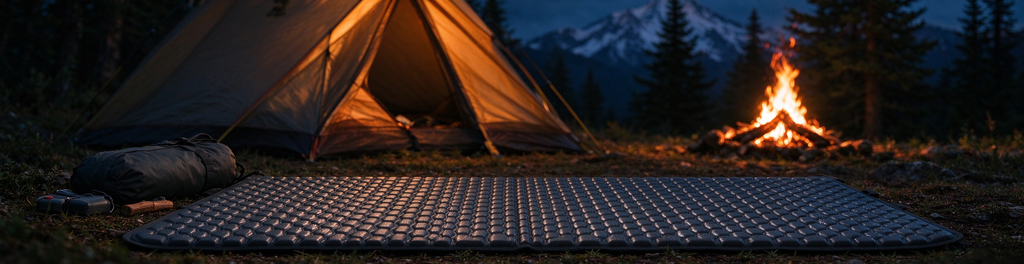
Find the Right Camping Sleeping Pad
Compare thickness, insulation, packed size, and comfort before choosing a pad for your next trip.
Amazon Button: Check Price on Camping Sleeping Pad→
3. Camping Pillows: A Small Upgrade That Can Make a Difference
A camping pillow isn’t essential for every camper, but it can make a noticeable difference if you struggle to get comfortable.
I used to think a rolled-up jacket was good enough. It can work in a pinch, but clothing shifts around during the night, and the height isn’t always right for your neck.
There are three common options.
Inflatable Camping Pillows
These pack down very small and are useful for backpacking. You can adjust their firmness by adding or releasing air.
The downside is that some feel slippery or too bouncy. Check the shape and surface material, not just the packed size.
Compressible Camping Pillows
These use foam, fiber, or other soft fill to provide a feel closer to a regular pillow.
They’re often more comfortable for car camping, but they take up more room and may weigh more than inflatable options.
Hybrid Camping Pillows
Hybrid designs combine inflatable support with a softer outer layer. They can be a useful middle ground for campers who want to save space without sleeping directly on a bare inflatable surface.
How to Choose the Right Pillow
Consider your usual sleeping position:
- Side sleepers: often need more height to keep the head and neck aligned.
- Back sleepers: may prefer a lower, supportive pillow.
- Stomach sleepers: often need a thinner pillow.
These are starting points, not strict rules. Your body shape and mattress or pad thickness also matter.
For car camping, I’d prioritize comfort over minimum weight. For backpacking, I’d look for a compact pillow that stays in place when I turn over.
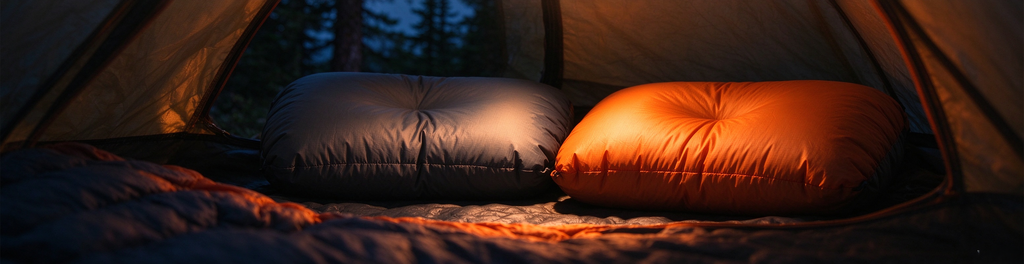
Choose a Camping Pillow
Find a pillow that fits your sleeping position, preferred firmness, and available packing space.
Amazon Button: Check Price onCamping Pillow →
4. Build a Complete Camping Sleep System
The best individual products won’t necessarily work well together. A sleeping bag, pad, and pillow should suit the same trip.
Here are three practical starting points.
Budget Setup for Beginners
Best for: summer car camping, established campsites, and people who are just getting started.
Consider:
- An affordable synthetic sleeping bag suitable for expected nighttime temperatures.
- A basic foam sleeping pad or a budget inflatable pad.
- A compact pillow or a small compressible pillow.
This is a sensible place to start if you don’t yet know how often you’ll camp. You can upgrade individual items later rather than buying an expensive system immediately.
Lightweight Backpacking Setup
Best for: hiking to campsites and carrying all your gear.
Consider:
- A lightweight down or synthetic sleeping bag selected for the expected conditions.
- A compact inflatable sleeping pad with adequate insulation.
- A lightweight inflatable or hybrid pillow.
Here, packed size and weight matter more. But don’t sacrifice necessary warmth just to reduce the weight on your back.
Comfort-Focused Car Camping Setup
Best for: weekend trips, family camping, and campsites where you don’t need to carry gear far.
Consider:
- A roomy sleeping bag or suitable quilt system.
- A thicker sleeping pad or compatible camping mattress.
- A compressible pillow.
- Extra insulation for colder conditions when needed.
Because you don’t have to carry everything on your back, you can trade some weight and packed size for comfort.
Build Your Camping Sleep System
Compare sleeping bags, pads, and pillows to find a setup that suits your trip and budget.
Amazon Button: Check Price onCamping Sleep System →
5. Common Sleeping Gear Mistakes to Avoid
You don’t have to make every camping mistake yourself. A few basic checks can prevent an uncomfortable night.
Mistake 1: Choosing a sleeping bag based only on its advertised temperature.
Read the details of the rating and choose equipment appropriate for your expected conditions. Remember that the sleeping pad also affects warmth.
Mistake 2: Ignoring the sleeping pad’s insulation.
A comfortable-looking pad may not provide enough insulation for cold ground. Check its R-value and the conditions for which it is intended.
Mistake 3: Buying a pad that’s too narrow.
If your elbows or shoulders keep touching the ground, your sleep can suffer. Check the dimensions against your body size and sleeping position.
Mistake 4: Packing a sleeping bag away while it’s damp.
Moisture can lead to odors and damage over time. Air out your bag after trips and follow the manufacturer’s cleaning and storage instructions.
Mistake 5: Spending too much on the wrong feature.
A premium down bag may make sense for a long backpacking trip, but it may not be the best use of your money if you mostly camp beside your car in warm weather.
Mistake 6: Forgetting to test your setup at home.
Inflate your pad, try your pillow, and check that your bag fits before leaving. It’s much easier to discover a leaking valve or uncomfortable pillow at home than at a remote campsite.
6. How Much Should You Spend on Camping Sleeping Gear?
You don’t need to buy the most expensive gear to sleep reasonably well outdoors. What matters is matching each item to your trip.
| Budget Level | What to Prioritize | Best For |
|---|---|---|
| Budget | Reliable basic insulation and a suitable pad | Beginners and occasional summer campers |
| Mid-range | Better comfort, fit, and packability | Regular weekend campers |
| Premium | Lower weight, advanced materials, specialized warmth | Frequent backpackers and demanding conditions |
Prices vary by brand, season, and design, so compare current prices and specifications rather than assuming that a higher price always means better performance.
If you’re starting from scratch, I would prioritize a suitable sleeping pad and sleeping bag before spending a lot on accessories. Add a pillow that fits your needs, then upgrade based on the problems you actually encounter outdoors.
7. What to Look for When Buying Sleeping Gear in 2026
Product names and marketing claims can make comparisons confusing. Focus on the specifications that affect real use.
For sleeping bags:
- Clear temperature ratings and test standards, where applicable.
- Insulation type and weight.
- Fit and room to move.
- Packed size and total weight.
- Care instructions and warranty terms.
For sleeping pads:
- R-value.
- Dimensions and thickness.
- Weight and packed size.
- Inflation method and valve design.
- Repair options and durability information.
For camping pillows:
- Height and shape.
- Inflation or fill material.
- Surface feel and stability.
- Packed size and weight.
- Ease of cleaning.
Before buying, compare the manufacturer’s specifications with independent reviews. Look for detailed information about comfort, insulation, durability, and actual use rather than relying on star ratings alone.
At Peakpulse, the goal is to help readers understand what equipment is suitable for their trips, not simply to recommend the most expensive option.
FAQ: Camping Sleeping Gear
What is the most important piece of camping sleeping gear?
Both the sleeping bag and sleeping pad are important. The bag provides insulation around your body, while the pad cushions you and reduces heat loss to the ground. They should be chosen as a system.
Is an inflatable sleeping pad better than a foam pad?
Not for everyone. Inflatable pads often provide more cushioning and pack smaller, while foam pads are simple, durable, and usually less expensive. Your budget, sleeping style, and camping conditions determine which is better for you.
Do I really need a camping pillow?
No, but a suitable pillow can improve comfort and neck support. A compact inflatable pillow works well for many backpackers, while a compressible pillow may suit car campers better.
Can I use a regular blanket instead of a sleeping bag?
For warm-weather car camping, a blanket may be sufficient if the weather and campsite conditions allow it. For colder conditions or backpacking, a suitable sleeping bag or quilt is generally easier to pack and manage. Always plan for the lowest temperatures you may encounter.
How do I keep my sleeping gear warm and dry?
Use appropriate shelter, keep gear away from standing water, air it out when possible, and follow the manufacturer’s care instructions. In wet conditions, a dry storage bag can help protect insulation during transport.
How often should I replace my sleeping gear?
There is no fixed replacement schedule. Replace or repair gear when insulation no longer performs adequately, pads develop leaks that cannot be reliably fixed, materials deteriorate, or the equipment no longer suits your trips.
Final Thoughts: Buy for the Way You Actually Camp
The best camping sleeping gear isn’t necessarily the lightest, warmest, or most expensive. It’s the combination that helps you sleep comfortably in the conditions you actually encounter.
For occasional summer camping, a suitable sleeping bag and simple pad may be all you need. For backpacking, weight and packed size become more important. For colder trips, insulation and a properly matched sleep system deserve extra attention.
Start with the sleeping bag and pad. Add a pillow that works for your sleeping position. Test everything before your trip, and upgrade only when you know what needs improvement.
A comfortable night outdoors makes the next morning much better—and that’s one of the simplest ways to enjoy camping more.
Ready for a Better Night Outdoors?
Start with the essentials: a sleeping bag suited to the weather, a properly insulated sleeping pad, and a pillow that helps you rest comfortably.
Explore Sleeping Gear on Amazon →
Affiliate disclosure: Peakpulse may earn a commission when you purchase products through qualifying affiliate links, at no additional cost to you. Recommendations should be based on suitability, specifications, and available evidence rather than commission rates.
Editorial note: This guide explains how to choose sleeping gear. Any specific product recommendations should be added only after verifying current product specifications, prices, and relevant testing or review evidence.

