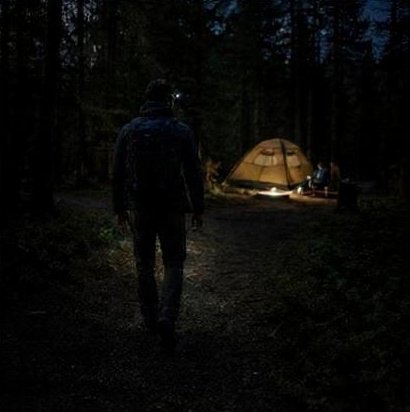
The part of camping nobody really thinks about until it happens? Trying to find something in the dark.
You’ve finished setting up the tent, dinner is almost ready, and the last bit of daylight is disappearing behind the trees. Then you realize the lighter is in the wrong bag, your water bottle is somewhere near the tent, and you can barely see what you’re doing.
That’s when a good camping light earns its place in your gear box.
I wouldn’t spend a fortune trying to light up every corner of a campsite. What matters is having the right light for the right job. You need something for moving around, something comfortable for cooking or sitting with friends, and a backup in case your main light dies.
Here’s what I’d prioritize when putting together a practical camping lighting setup, especially if I wanted to keep things simple and avoid buying gear I didn’t need.
The Camping Lighting Essentials at a Glance
If you want the short version, start here.
| Camping Light | What It’s Best For | Priority |
|---|---|---|
| Headlamp | Setting up camp, walking, cooking, small repairs | Essential |
| LED lantern | Lighting a table or shared campsite | Very useful |
| Flashlight | Focused beam and backup lighting | Recommended |
| String lights | Soft lighting around a campsite | Optional |
| Spare batteries or power bank | Keeping lights running | Depends on your setup |
My advice: If you can only buy one light, choose a headlamp. Add a lantern when you want to make your campsite more comfortable, and keep an independent backup light for trips where getting stuck in the dark would be a real problem.
1. A Headlamp Is the First Light I’d Pack
A headlamp might not be the most exciting piece of camping gear, but it’s one of the easiest to justify.
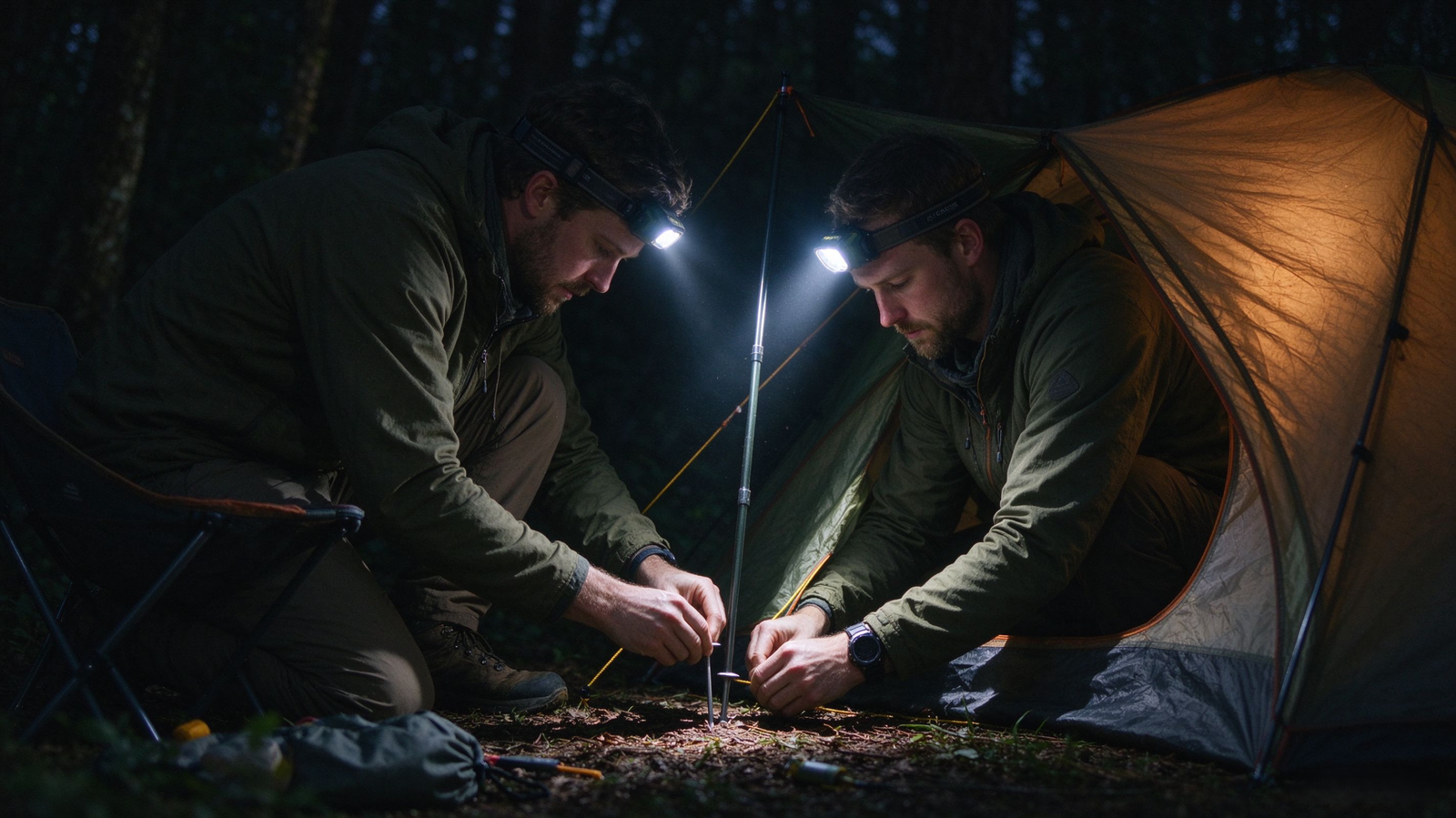
Think about how many things you do after sunset. You might need to finish securing your tent, prepare dinner, sort out your sleeping bag, or walk to the restroom. Most of these jobs are easier when both hands are free.
That’s the real advantage of a headlamp. You don’t have to keep putting down a flashlight every time you need to use your hands.
What matters more than maximum brightness?
When comparing headlamps, I pay attention to a few practical details:
- A comfortable headband: An uncomfortable strap becomes irritating when you wear it for more than a few minutes.
- A useful low setting: You don’t need a powerful beam to find something inside your tent.
- Simple controls: You should be able to change brightness without cycling through a confusing sequence of modes.
- Reliable battery life: The highest brightness figure means little if the battery runs down quickly.
- A sensible charging system: USB rechargeable models are convenient, while replaceable batteries can be useful on longer trips.
A red-light mode can also be handy for preserving dark adaptation, especially when looking at a map or moving around camp without blasting everyone with bright white light.
One mistake worth avoiding
Don’t buy a headlamp based on lumens alone.
A high-output model can be useful when you need to see farther, but maximum brightness isn’t necessary for every task. For cooking, packing, and moving around a tent, a comfortable beam and good low-light control can matter more.
Best for: Every camper, especially beginners, hikers, and anyone who might arrive at camp close to sunset.
Shop camping headlamps on Amazon
2. A Camping Lantern Makes Evenings Much Better
A headlamp helps you get things done. A lantern makes it easier to enjoy the campsite.
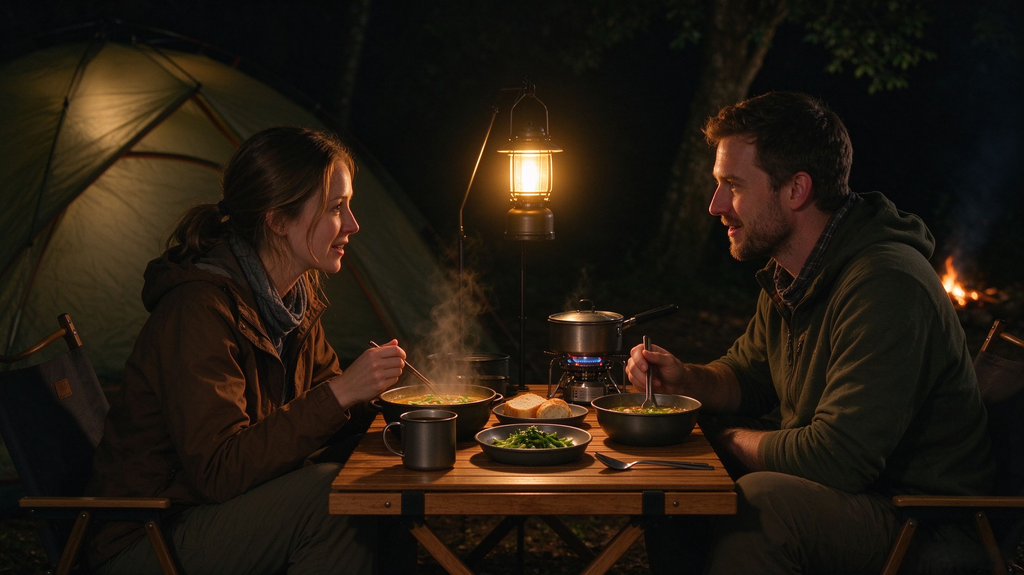
This becomes obvious when several people are sitting around a table. If everyone relies on headlamps, the light keeps moving. Someone turns to speak, and their beam ends up in another person’s eyes. Someone else looks down at their food, leaving half the table in shadow.
A lantern provides a steady source of light for the whole group.
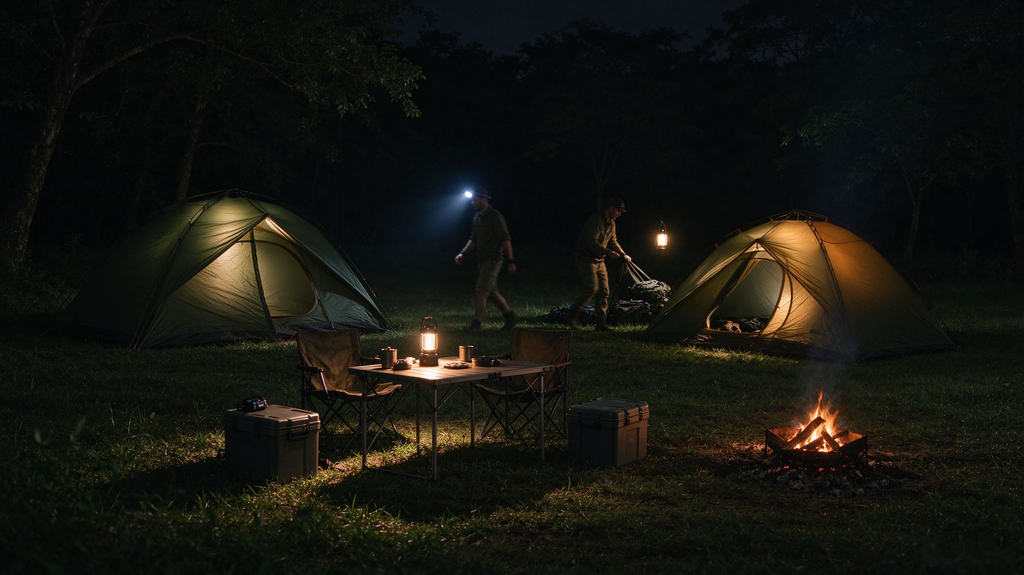
For car camping, I’d put a lantern near the cooking or seating area. It gives everyone enough light to prepare food, find utensils, play cards, or simply sit and talk.
What I’d look for in a lantern
Adjustable brightness comes first. You want enough light to prepare dinner, but you don’t need the same output when you’re winding down for the night.
A stable base or a suitable hanging point is useful. A lantern that tips over easily can become frustrating on a crowded table. If you plan to hang it, make sure the attachment point is designed to support it.
Battery life deserves a closer look. Check how long the lantern runs at the brightness you expect to use. Maximum-output runtime and low-mode runtime can be very different.
Weather resistance can be worth paying for. Outdoor equipment may encounter damp ground, condensation, or light rain. Check the actual product rating rather than assuming every camping lantern is waterproof.
Do you need an expensive lantern?
Not necessarily.
For an ordinary weekend at a developed campground, a basic dimmable LED lantern may do everything you need. More expensive models can offer longer runtime, improved light distribution, rechargeable batteries, or extra features, but those features only matter if you’ll use them.
Best for: Car camping, family trips, cooking outside, and anyone who likes spending time around camp after dark.
Shop LED camping lanterns on Amazon
3. Keep a Flashlight as Your Backup
A flashlight is easy to overlook if you already have a headlamp, but it still has a place in a camping kit.
The main difference is the beam. A handheld flashlight lets you point the light toward a particular object without turning your head. That can be useful when checking something beyond your immediate campsite, searching around the car, or looking into a dark storage area.
It also gives you a second light source if your headlamp runs out of power.
I wouldn’t necessarily buy an expensive flashlight just to keep in a camping box. For many weekend campers, a reliable model with straightforward controls and a sensible battery system is enough.
What to check before buying
- Does the switch work easily with one hand?
- Is the beam suitable for close-up tasks as well as looking farther away?
- Can you recharge it or replace its batteries conveniently?
- Is it small enough to keep somewhere accessible?
- Will it still be ready to use after sitting in storage?
That last point matters. A backup light is only useful if it actually works when you need it.
Check the battery before each trip and store the flashlight somewhere you can find it without emptying your entire gear box.
Best for: Car campers, remote trips, and anyone who wants an independent backup.
Shop camping flashlights on Amazon
4. Are Camping String Lights Worth Bringing?
String lights can make a campsite look great, but I’d treat them as an extra rather than a necessity.
They’re useful when you want softer lighting around a picnic shelter, under an awning, or near a seating area. They can also help make a familiar campsite easier to recognize when you return after dark.
But they don’t replace a headlamp.
If you need to find a dropped tent peg, cook with both hands, or walk away from camp, decorative lights won’t do much to help.
When I’d bring them
- Car camping where weight and space aren’t major concerns.
- Longer evenings spent around a table or awning.
- Trips where comfortable ambient lighting is part of the experience.
When I’d leave them at home
- Backpacking trips where every ounce matters.
- Short overnight trips with little time spent sitting outside.
- Any setup where you haven’t packed a reliable personal light yet.
If you do use string lights, keep the brightness modest and avoid shining them into neighboring campsites. A campsite doesn’t need to look like a festival to be comfortable.
Shop outdoor camping string lights on Amazon
5. Rechargeable or Battery-Powered: Which Is Better?
I wouldn’t say one system is always better. It depends on where you camp and how long you stay.
Rechargeable lights
These are convenient for weekend trips. Charge everything at home, pack a suitable power bank if needed, and you’re ready to go.
The downside is that you need to plan for recharging. If you’re camping for several days without access to power, you need to know whether your batteries will last.
Replaceable-battery lights
These can make sense for longer trips or situations where you want to carry spare batteries. Instead of waiting for a device to recharge, you can replace the batteries if you have the correct spares.
The trade-off is carrying those batteries and keeping them stored properly.
What I’d do
For a typical car-camping weekend, I’d be happy with rechargeable lights as long as they were fully charged before leaving.
For a longer trip away from power, I’d pay more attention to runtime, charging access, and whether an independent backup uses a different power source.
Whatever you choose, don’t assume the battery is full just because the light worked last time. Check it before leaving home.
6. How Much Brightness Do You Actually Need?
It’s tempting to shop by the biggest lumen number on the box. I’d resist that temptation.
Lumens describe light output, but they don’t tell you everything about how useful the light will be. Beam shape, distance, glare, brightness controls, and battery performance all affect the experience.
Here’s a more practical way to think about it:
| Task | What to Prioritize |
|---|---|
| Finding gear inside a tent | Low brightness and a comfortable beam |
| Cooking dinner | Even lighting and adjustable output |
| Walking around camp | A reliable headlamp with a useful medium setting |
| Checking a distant object | A flashlight with a suitable focused beam |
| Lighting a group table | A lantern with broad, adjustable light |
You don’t need every light to be extremely bright. You need enough light for the task without wasting battery or making everyone squint.
One more thing: avoid shining powerful beams directly into other campers’ faces or neighboring tents. Good campsite lighting should help people see, not make the whole campground brighter than necessary.
7. How to Set Up Your Campsite Lighting
You can have good equipment and still end up with an awkward setup. Where you place each light makes a difference.
Around the cooking area
Put the lantern somewhere stable where it illuminates the work surface without shining straight into people’s eyes. Keep it away from the stove’s flames and hot surfaces, and follow the manufacturer’s instructions for safe placement.
A headlamp is useful when you need to inspect food, read a label, or handle a small task that needs more direct light.
Inside the tent
Use a low setting whenever possible. Bright light bouncing off tent fabric can feel harsh, particularly in a small tent.
Secure the light properly rather than leaving it somewhere it can fall onto sleeping gear. Follow the light and tent manufacturers’ guidance about hanging points and safe use.
Along the route to the restroom
Keep your headlamp or flashlight somewhere easy to reach. If you have to search through several bags to find it, you’ll wish you had planned ahead.
Remember that a campsite lantern is not a substitute for a personal light when you walk away from the lit area.
Before going to sleep
Switch off lights you no longer need, and keep a personal light within reach. You may need it during the night, and you don’t want to discover that it has run out of power when you’re already outside the tent.
8. Five Camping Lighting Mistakes I Would Avoid
1. Bringing only one light
A single light may be enough for a short trip close to home, but it leaves you without a backup if it fails. For remote camping, carry an independent second source.
2. Forgetting to charge everything
This is an easy problem to prevent. Check your lights and charging equipment before you pack, rather than assuming everything is ready.
3. Buying more brightness than you need
High output can be useful, but it isn’t the answer to every lighting problem. A lantern with good brightness control can be more comfortable than one that is simply powerful.
4. Leaving the lantern in the gear box
Once it gets dark, you don’t want to dig through your entire setup to find the light. Put your headlamp somewhere accessible as soon as you arrive.
5. Treating decorative lights as essential equipment
String lights look nice, but they shouldn’t be the only lighting you bring. Prioritize a personal light and a dependable power plan first.
9. My Practical Camping Lighting Checklist
Before leaving for your next trip, use this simple checklist.
- A headlamp or flashlight for each person who needs a personal light.
- One shared lantern for the cooking or seating area, if useful for your trip.
- A separate backup light for remote or multi-day camping.
- Fully charged rechargeable lights.
- Spare batteries or a power bank when appropriate.
- Charging cables that fit your devices.
- A suitable, stable place to position the lantern.
- A low-light option for inside the tent.
- Lights stored where you can reach them after dark.
You don’t have to buy everything at once. If your budget is limited, start with the personal light and add the shared lantern later.
Final Thoughts: Keep Your Lighting Simple
The best camping lighting setup isn’t the one with the most gadgets. It’s the one that lets you handle the basics without turning every evening task into a struggle.
For most beginners, I’d start with a headlamp, add a lantern for shared spaces, and keep a flashlight or another independent light as a backup when the trip calls for it.
String lights are a nice extra if you have room, but they can wait.
Before your next trip, charge your lights, check your batteries, and decide where each light will live once you arrive. Those small preparations can save a lot of frustration after sunset.
Because when the campsite gets dark, you want to be enjoying the evening—not rummaging through a bag looking for the one light that still works.
Frequently Asked Questions
What is the most important camping light?
For most campers, a headlamp is the best first purchase because it leaves both hands free. It helps with tent setup, cooking, walking, and other tasks after dark.
Do I need a lantern if I already have a headlamp?
Not necessarily, but a lantern makes shared areas easier to use. If you mostly backpack or go to sleep early, a headlamp may be enough. For car camping and group dinners, a lantern is a useful addition.
How many camping lights should I bring?
For a typical car-camping trip, a headlamp for each person and one shared lantern are a good starting point. Consider a separate backup light for longer or more remote trips.
Are camping string lights necessary?
No. They’re mainly for ambient lighting and atmosphere. They’re worth considering when you have extra space, but they should come after your essential personal lighting.
Should I leave my lantern on all night?
Usually, there’s no need. Turn it off when you’re finished using it to conserve power and reduce unnecessary light around the campsite. Keep a personal light within reach in case you need to get up.
Can I rely on my phone flashlight?
A phone flashlight can be useful in a pinch, especially on a short trip close to help. However, it uses the same battery you may need for navigation or communication. For regular camping, a dedicated light is a better choice.